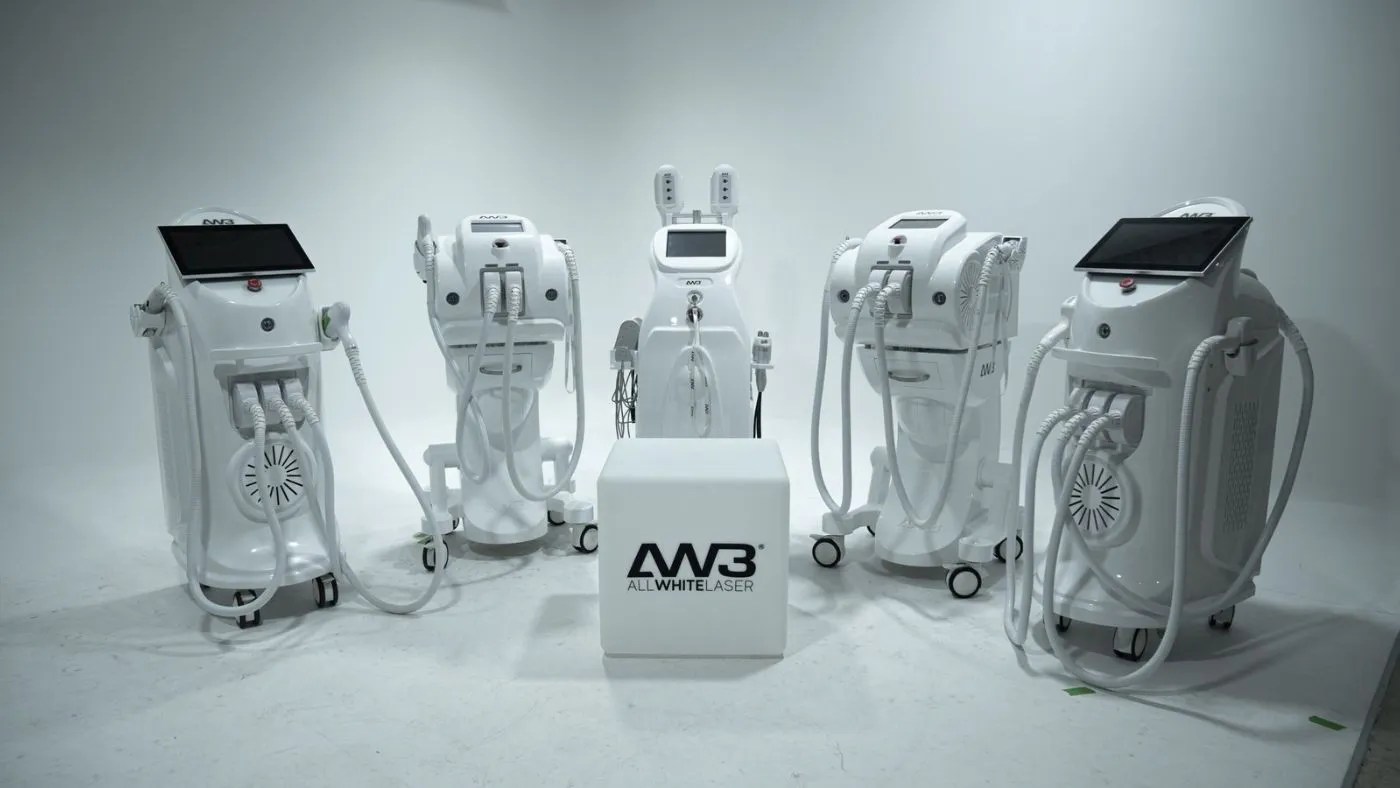
A laser machine demonstration should help you assess how the system works during a real treatment appointment. Consider handpiece comfort, cooling, cleaning and supplier support. You should not judge a machine only by its screen, power figures or sales presentation.
Buying a professional laser machine is a major investment for a UK salon or clinic. The machine may be used every day and could become an important source of income for the business. It therefore needs to be suitable for your treatments, clients, practitioners and premises.
A live demonstration gives you a chance to test the machine before you buy it. However, it is easy to miss important details if you arrive without a clear plan.
Use this laser machine demo checklist to record what you see and compare shortlisted systems on the same terms.
Prepare Before the Laser Machine Demonstration
Before attending the demonstration, decide what your clinic needs from the machine.
Think about:
- The treatments you want to offer
- The skin types you expect to treat
- Common hair colours and thicknesses
- The size of your treatment room
- Your expected number of appointments
- The experience of your practitioners
- Your available budget
- Whether you want a dedicated or multi-functional system
- Your insurance and local authority requirements
Make a short list of essential features. Separate these from features that would simply be useful.
For example, treating a wide range of skin types may be essential. Having several treatment functions in one machine may be useful, but it may not be necessary if your clinic only plans to offer hair removal.
You can compare different types of professional laser hair removal machines before deciding which models to demonstrate.
Ask for a Full Treatment Workflow
Ask to see the full appointment workflow, where appropriate, rather than judging the machine from a few pulses.
Ask the representative to explain the complete treatment process, including:
- Starting the machine
- Selecting the treatment mode
- Entering client or treatment information
- Assessing the client
- Choosing suitable settings
- Explaining the patch-test process and records
- Preparing the treatment area
- Showing how a treatment is performed when appropriate
- Monitoring the skin response
- Recording treatment details
- Cleaning the machine
- Shutting it down
This helps you see how the machine fits into a real appointment. Any live test or treatment should follow the clinic’s usual assessment, consent, safety and patch-test procedures. If a full treatment cannot be shown, ask the supplier to walk through the remaining stages and mark them as explained rather than observed.
A system may look simple during a short sales demonstration but involve extra steps during everyday use. Ask your practitioner to operate the controls wherever possible. This will give you a better understanding of the actual workflow.
Agree What Will Be Demonstrated
Before the appointment, ask each supplier to show comparable treatment areas and the same stages of the workflow where practical. Note who operates the machine, which handpiece is used, what you see live and what the supplier only explains. This makes your notes easier to compare later.
A short test area can show how the controls, handpiece and cooling feel. It cannot prove long-term treatment results. Do not use a model or client for a live test unless the usual clinical checks, consent and safety steps have been completed.
1. Check the Exact Machine Configuration
Ask the supplier to demonstrate the exact model, handpieces and treatment functions included in your quotation. Check that it covers the services your clinic plans to offer.
If the demonstration uses an optional handpiece, a different model or extra functions, record these separately. Ask for a written list of what is included. You can compare the wider professional laser machines before shortlisting models, but judge the demonstration on the configuration you could actually buy.
2. Test the Handpiece Carefully
The handpiece is one of the most important parts of the machine. Your practitioner may hold it for several hours during a busy working day.
During the demonstration, check:
- The weight of the handpiece
- Its size and shape
- The position of the buttons
- The balance in your hand
- How easily it moves across the skin
- The flexibility of the cable
- Whether the cable pulls against your wrist
- Whether the treatment window is easy to see
- How easy it is to reach smaller areas
- Whether different tips or spot sizes are available
Ask the practitioner who will use the machine most often to test it. What feels comfortable for one person may feel heavy or awkward for another.
Hold the handpiece in several treatment positions. Test it as if you were working on the legs, back, underarms and face.
A handpiece that feels comfortable for two minutes may become tiring during a large-area treatment. Ask whether you can test it for longer than a few minutes.
3. Assess the Spot Size and Treatment Coverage
Spot size can affect how quickly a practitioner covers a treatment area.
A larger treatment window may help with areas such as the legs, back or chest. A smaller tip may provide more control around the upper lip, jawline or other detailed areas.
Ask the representative to show:
- The standard spot size
- Any optional spot sizes
- How the treatment window sits against the skin
- How the practitioner avoids missed areas
- How the system handles curved or smaller areas
- Whether changing tips affects settings or cooling
- The cost of additional tips
Do not judge speed from the stated repetition rate alone. Spot size, operator technique, cooling and the machine’s ability to maintain performance can all affect the real treatment time.
4. Watch the Machine Under Continuous Use
A short demonstration may not show how the machine performs during a full appointment.
Ask to see the machine operate continuously for a suitable period. Watch whether it maintains a steady pulse rate and whether any settings change as the system becomes warm.
Pay attention to:
- Consistency between pulses
- Delays between shots
- Cooling performance
- Noise levels
- Heat produced by the machine
- Warning messages
- Handpiece temperature
- Whether the system needs regular pauses
- How smoothly the operator can continue treating
If the supplier makes a claim about treatment speed, ask for a live demonstration on a realistic treatment area.
Record the start and finish time. Do not depend only on an estimated treatment time given in a brochure.
5. Test the Cooling System
Cooling can affect client comfort and treatment delivery. Ask how the system cools the skin and how it manages heat inside the machine. These may be separate systems.
During the demonstration, check:
- How quickly the treatment head becomes cool
- Whether the cooling feels even
- Whether it remains consistent during repeated use
- Whether the cooling level can be adjusted
- How the skin feels during and after a test area
- Whether the treatment head becomes warm
- Whether condensation develops
- Whether the machine needs time to recover
Ask how the cooling system is maintained. Find out whether water, filters or other parts need to be changed.
Do not rely only on terms such as “ice cooling†or “pain-freeâ€. Ask to experience the cooling and see how it performs during continuous use.
Client comfort can vary according to the treatment area, settings, skin type and personal sensitivity. One comfortable test pulse does not prove that every client or treatment will feel the same.
6. Review the Settings and Control Panel
The control panel should give trained practitioners suitable control without making normal treatments unnecessarily difficult.
Ask the representative to demonstrate:
- How client skin type is selected
- How hair type is recorded
- How treatment settings are chosen
- Which settings are automatic
- Which settings can be changed manually
- Whether preset protocols are available
- How settings are confirmed before treatment
- Whether unauthorised changes can be restricted
- How previous treatment details are stored
- What happens if the wrong option is selected
A simple screen is useful, but it should not replace professional judgement. Practitioners still need to complete a consultation, identify contraindications, carry out patch testing and select settings suitable for the individual client.
Ask what each displayed figure means. A high number on a screen does not automatically mean that a machine will provide better results.
7. Check Operator Comfort
Practitioner comfort is easy to overlook during a sales demonstration.
Ask the practitioner to use the machine from the position they would normally work in. Check whether the screen, handpiece and controls can be reached without repeated stretching or twisting.
Review:
- Screen height
- Screen angle
- Handpiece holder position
- Cable length
- Cable movement
- Foot-pedal position, if used
- Machine height
- Wheel movement
- Brakes and stability
- Access around the treatment bed
Consider whether both left-handed and right-handed practitioners can use the system comfortably.
Poor positioning may slow treatments and place unnecessary strain on the wrist, shoulder or back.
8. Ask for the Cleaning Process to Be Demonstrated
Cleaning needs to be practical enough to complete between clients.
Ask the representative to show exactly how to clean:
- The treatment window
- Handpiece casing
- Replaceable tips
- Cables
- Touchscreen
- Machine surfaces
- Handpiece holders
- Any filters or water system
Ask which cleaning products are approved by the manufacturer. Some products could damage surfaces, seals or optical parts.
Also ask:
- How long cleaning takes
- Whether parts must cool first
- Which parts are consumable
- How often filters need changing
- Whether the water system needs maintenance
- How contamination is prevented
- What happens if the treatment window is damaged
Include cleaning time when calculating appointment length. A fast treatment can still create a slow workflow if cleaning and preparation take too long.
9. Check Whether the Machine Fits Your Room
Ask for the model’s dimensions, weight, electrical needs, ventilation clearance and operating conditions in writing. During the demo, notice the space needed to move the machine, reach the controls and work with the handpiece cable.
Check delivery access and whether installation or an electrical assessment is needed. For a full premises check, use the laser treatment room setup checklist.
10. Confirm the Training Included
Ask the supplier to show the training outline for the exact model. Record how many practitioners are covered, whether they can practise with the handpieces, how competency is assessed and what support follows installation.
Manufacturer training on a specific machine is different from wider laser or IPL training. Review the professional aesthetic machine training guide and confirm qualification and cover requirements with your insurer before buying.
11. Review the Machine Documents
Ask to see the documents that will be supplied with the machine.
These may include:
- User manual
- Technical specification
- Manufacturer details
- Machine serial number
- Regulatory or conformity documents
- Warranty terms
- Maintenance schedule
- Servicing information
- Training documents
- Treatment protocols
- Safety instructions
- Cleaning guidance
Your insurer, Laser Protection Adviser or local authority may ask for some of these documents.
Ask whether the documents relate to the exact model being demonstrated. Avoid accepting a general document that does not clearly identify the machine.
12. Request Servicing and Running Costs in Writing
Ask for the service schedule, the cost of planned visits and common replacement parts, any call-out charges and the process if the machine is out of use. Check whether servicing takes place at your clinic and how quickly parts can usually be supplied in the UK.
Record these figures for every shortlisted model. To work them into your service pricing, use the hair removal cost-per-treatment guide.
13. Examine the Warranty
Read the full warranty rather than relying on the headline length.
Check:
- When the warranty begins
- Which machine parts are included
- Whether handpieces are covered
- Whether consumable parts are excluded
- Labour and call-out charges
- Delivery and collection costs
- Servicing conditions
- Actions that could cancel the warranty
- Whether a replacement machine is available
- Whether the warranty can be extended
Ask for the warranty terms in writing and read them before paying a deposit.
14. Test the Supplier’s Support
The supplier relationship continues after the demonstration.
Ask:
- Is support based in the UK?
- Which days and hours is support available?
- How can technical help be contacted?
- Is telephone or video support available?
- Are engineers employed directly?
- How quickly are faults normally reviewed?
- Are replacement parts held in the UK?
- Is ongoing clinical guidance available?
- Can new members of staff receive training?
- Is marketing support included?
- Can you speak to an existing clinic owner?
Pay attention to how clearly the representative answers questions. If it is difficult to obtain documents or technical information before the sale, support may not improve after payment.
Laser Machines Demo Scorecard
Use the same scorecard for every shortlisted machine. Score each area from 1 to 5, where 1 is poor and 5 is excellent. In the last column, mark each point as observed live, supported by a document, or a supplier claim. Leave a score blank if you could not assess it.
| Area to assess | Score out of 5 | What to record | Evidence: live, document or claim? |
|---|---|---|---|
| Treatment suitability | Treatments, skin types, hair types and clinic needs | ||
| Handpiece comfort | Weight, balance, grip and cable movement | ||
| Treatment workflow | Setup, settings, operation and shutdown | ||
| Coverage and speed | Spot size, pulse consistency and observed treatment time | ||
| Cooling | Speed, consistency and performance during repeated use | ||
| Client comfort | Sensation during the agreed test area | ||
| Operator comfort | Screen position, posture, movement and reach | ||
| Controls | Ease of use, presets, manual settings and safety controls | ||
| Cleaning | Required steps, approved products and time needed | ||
| Room suitability | Dimensions, weight, power, ventilation and movement | ||
| Training | Course content, practical work, certificates and staff places | ||
| Documentation | Manual, specifications, conformity and safety information | ||
| Servicing | Frequency, cost, engineer access and expected downtime | ||
| Warranty | Length, included parts, exclusions and extra charges | ||
| Supplier support | Contact methods, response process and UK parts availability | ||
| Running costs | Consumables, handpieces, filters, servicing and repairs |
There are 16 scored areas, giving a possible total of 80 when all can be assessed. Do not treat a supplier claim as a live result or choose a machine based only on the total.
Some factors should be treated as essential. A machine should not remain on your shortlist if it cannot support your planned treatments, obtain suitable insurance, fit your premises or meet the required documentation and training standards.
Keep Evidence From Every Demonstration
Record what you see rather than relying on memory.
With the supplier’s permission, you may be able to keep:
- Photographs of the machine and handpieces
- A video of the basic workflow
- Notes on treatment speed
- Notes from the practitioner testing the handpiece
- Copies of specifications
- Written answers to technical questions
- Warranty information
- Training details
- Servicing costs
- A complete quotation
Record the exact model and configuration. Optional handpieces, wavelengths or features shown during a demonstration may not be included in the standard quotation.
Ask the supplier to list every included item in writing.
Red Flags During a Machine Demonstration
Be cautious if:
- The representative will not show a complete workflow
- You are not allowed to handle the handpiece
- Performance claims are not demonstrated
- Questions about cooling or settings receive vague answers
- Documents are unavailable
- The exact manufacturer is unclear
- Training details are not provided
- Warranty exclusions are hidden
- Servicing costs cannot be confirmed
- The supplier pressures you to pay immediately
- The demonstrated configuration does not match the quotation
- Results are guaranteed for every client
- Power figures are used as the only proof of performance
A professional supplier should allow reasonable questions and give you enough information to make an informed decision. If something could not be tested, ask for written evidence or a further demonstration before scoring it.
Final Questions to Ask Before Leaving
Before the demonstration ends, ask:
- Which machine would you recommend for my treatment list, and why?
- What is included in the quoted price?
- Which features shown today are optional?
- What training will each practitioner receive?
- What are the average yearly running costs?
- How often must the machine be serviced?
- How quickly can common parts be supplied?
- What happens if the machine stops working?
- Can I review the warranty before buying?
- Can I send the machine documents to my insurer?
- Can I speak to an existing UK clinic using this model?
- Can I have the answers and quotation in writing?
If you still have important unanswered questions, do not feel pressured to make a decision on the day.
Final Thoughts
A laser machine demonstration should help you test how the system performs in a realistic clinic setting. Look closely at the handpiece, workflow, cooling, controls, cleaning and operator comfort.
You should also review training, documents, running costs, warranty and technical support. These factors can affect the clinic long after the demonstration has ended.
Compare shortlisted machines under similar conditions. Record which findings you observed, which are backed by documents and which still need to be confirmed. This creates a fairer comparison and helps you look beyond sales claims.
When you are ready to compare professional systems, review AW3’s laser hair removal device or contact the AW3 team to discuss a machine demonstration for your UK salon or clinic.